The Healthcare Conundrum

CONUNDRUM: A confusing or difficult problem or question.

Now that I have retired, my entire routine has changed. One of the many cards I received upon retirement was one that said welcome to the seven-day weekend. I got a chuckle out of that one, but it has been prophetic. When I was working, there was a strict routine. Monday through Friday were workdays and most of the errands and honey-do stuff was relegated to the weekends. I knew what day of the week it was because I was looking my Outlook Calendar every day. Now, I constantly ask/remind myself what day of the week it is because I can stay up as late as I’d like, don’t wake up to an alarm or look at a calendar anymore. So, my routine has changed a lot and I’m slowly getting used to it.

The one routine that hasn’t changed but is becoming tedious is my dependence on the monthly treatments I receive for my MS. The routine has evolved over the last eighteen years, but the one constant has been multiple needle sticks, and various degrees of feeling like shit for the better part of three days every month. I believe these treatments have allowed the progression to stay confined to one limb, although that limb today is virtually useless, but other comorbidities have cropped up that these treatments can’t touch – mainly leg tremorsand arthritis in both hips. 

When I was first diagnosed with Primary Progressive MS, I understood and expected that my mobility was going to become compromised.  My goal was to do whatever I could to avoid being stuck in a wheelchair and hoped that whatever pain I’d experience would be manageable. Maybe I’d get lucky, and my progression would end before any of that happened. Beyond that, I didn’t dwell on a future that I presumed was far beyond the horizon. There would be plenty of time to address these things when my MS bill became due.

While living and working with MS had its challenges, it didn’t prevent me from doing what I wanted. Getting dressed became harder, but it was still very manageable. It took longer to complete chores and yard work, but I could still do them. My mobility was compromised, but I could still do pretty much anything I was doing before the diagnosis, except for running or jogging. The only accommodation I had to make, which I learned the hard way, was to avoid being outside during periods of high heat and humidity because it would sap my strength so much, I would need to take a long nap. 

Looking back on that time, my mindset was to put the blinders on, get whatever treatments I needed, and let the chips fall where they may. 

The MS has evolved from a minor foot drop to a leg that is limp and weak. I get relief from these treatments for maybe 5 to 7 days, but I’m wondering if this is more from the steroid infusions instead of the apheresis treatments and semi-annual Ocrevus infusions. Regardless, when it starts to wear off, I slowly regress over the next three weeks before I get another treatment, but the between treatments experience is more difficult than before because of the arthritis and the progression within the bad leg.

I think I am more psychologically wedded to continuing this because of the fear of what might happen if I stop. What I can contribute to the maintenance of this house and yard has shrunk significantly over the years, but I still can take care of my personal needs and manage to do some chores, but the degree of difficulty of doing these things is much higher. I do very little outdoor work that requires me to be upright. I have hated watching K having to take on more of the chore burden, and neither of us are getting any younger. I loathe the idea of being completely disabled and unable to contribute the small amount that I currently can, but it feels like that will eventually happen regardless of what I do.

From a practical perspective, healthcare is going to take a bigger chunk of my overall income now that I’m not getting a regular paycheck, and at what point in time will it become cost prohibitive? My neurologist has suggested I add IVG (IV immunoglobulin) infusions to the monthly Apheresis/Steroids routine and is in the process of trying to get that approved, but will it help, and will it add to the misery of the two days that follow? And with all the turmoil going on in Washington that sadly will continue over the next three years (at least), how will that affect my coverage and out of pocket costs? Hospital revenue is going to shrink with Medicare and Medicaid cuts and the elimination of the ACA subsidies, so how is that going to affect the availability of services? I like the idea of having more income to do fun things, but the number of those fun things have shrunk dramatically over the years due to the mobility issues and if those got worse if I stopped getting treated, what good would that extra income be? 

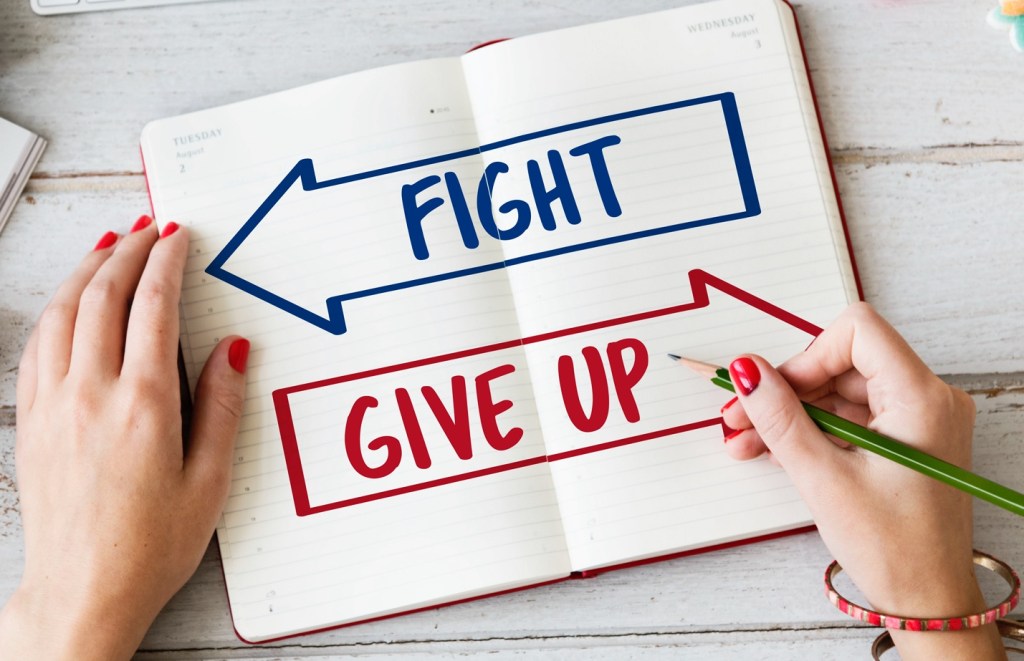
I’m frankly getting tired of doing this but don’t see any recourse. It’s like being on a merry-go-round you can’t get off. The conundrum is not knowing when to stop. I don’t see myself continuing this forever, but I’m not ancient and would like to believe I have a lot of potentially okay years left. I’m resigned to continuing the routine for now but can see the day where I say fuck it and throw in the towel. I’m not ready for the worst-case scenario if that were to happen and that is the biggest hurdle to overcome. It was better when I was younger and more naïve, but I can’t con myself into getting back into that headspace anymore.  The MS bill I knew would be out there when this all started is here, and that reality sucks!
Hell on Wheels

When I learned that I had Primary Progressive MS back in 2007, I instinctually understood a day would come when a wheelchair became necessary.  I dreaded the idea, but “that day” was too far out in the future to fret over it. So like everything else, I tucked that thought into the deepest recesses of my mind and focused on navigating my new reality.

Fast forward seventeen years, and while the wheelchair remains unnecessary, “that day” feels uncomfortably close because I can no longer walk any kind of distance easily. Like a lot of things with the disease, MS is not the direct cause, but a by-product of it is.

I wrote a post a few years back on how arthritis had settled in the knee of my bad leg and was causing mobility problems, not to mention occasional pain. It turns out that years of walking in a fucked-up manner has now created arthritic hips, and the hip of what used to be the good (left) leg is the one that is most affected because I’ve lost more than 50% of the cartilage in the joint, and the ball that fits into the hip socket is no longer round and smooth, but rough and gnarly.

That leg has always been the limb that supports most of my weight when I am walking or standing still, and now it often hurts to put weight on it. This is especially true if I’ve been on my feet a lot, and towards the end of the day in general. I’ve tried to compensate by putting more weight on the bad leg, but that unfortunately gets the arthritis in the knee going and creates a pain so sharp that my leg literally buckles to the point where I will fall if I don’t have anything to help keep me upright. I therefore try to make sure that whenever I am in the house, I always have one hand free or am close to an appliance, a wall or a counter to prop myself up to keep myself from collapsing when it does.

While I can work around this when I’m home, I have become reluctant to go to public events because I move like an inchworm and don’t want to risk falling in public.

K had been suggesting a mobility scooter for a while, which I had dismissed because I’m stubborn. If I could reasonably get from Point A to Point B, I was going to keep doing it my way on my own two feet. To do otherwise would be giving into the disease and waiving the white flag. But once the hip issue became pronounced, I couldn’t ignore that I needed to do something because to do otherwise would be a different form of giving up.       

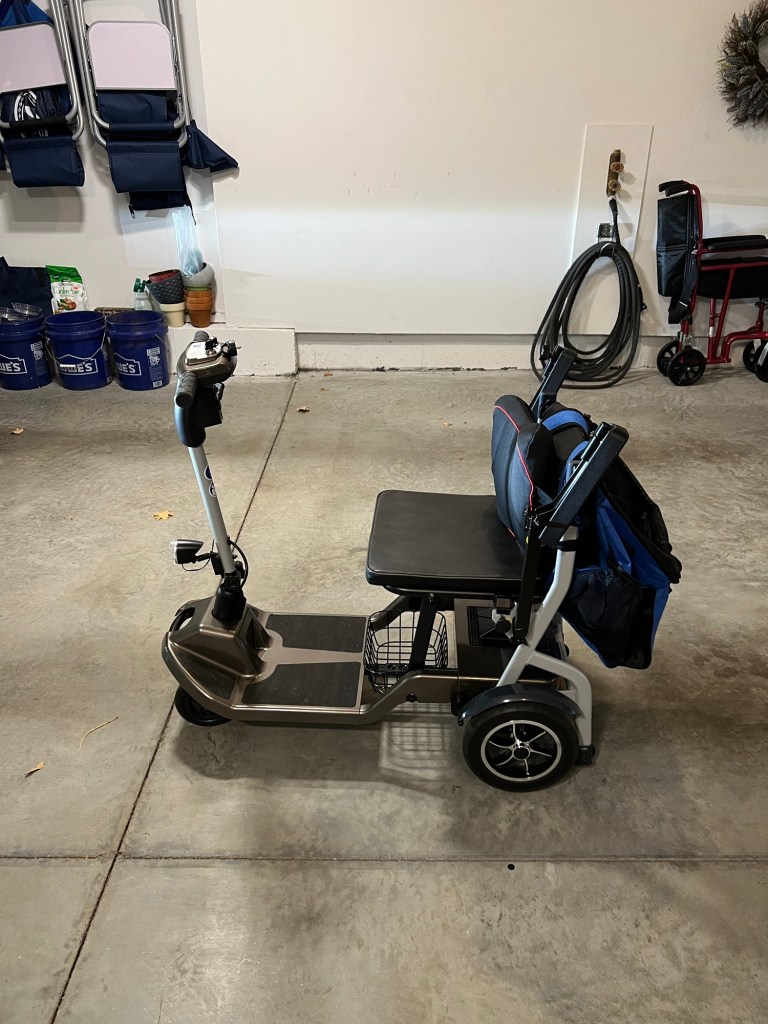
After doing my due diligence, I purchased the machine that you see at the beginning of this post, and it has improved my quality of life significantly in the short time I have had it. This bad boy, which I’m thinking of calling Moby, has a top speed of 6 MPH, which doesn’t sound fast until you are on it, has a tight turning radius, can handle uneven terrain and incline of up to 12 degrees. It can carry up to 265 pounds, is lightweight (around 37 pounds without the battery) and folds easily. Those last two items are key for any kind of travel.

I was self-conscious about being seen on it, but that lasted a nanosecond once I started using it. Moby makes going outside and doing outside things infinitely easier. Our town had its annual agricultural fair a few weeks ago and I never would have considered going without it. I’ve taken it to places like Lowes and Home Depot and it navigated the aisles and tight spaces easily. It allows K and I to spend more time together.

This is probably a temporary fix. I can’t use it any place that has stairs instead of ramps, and I’m not sure how it would work in a store that has narrow aisles. But I can still do stairs, so I don’t need it to visit friends at their houses. And I can negotiate distances and tight spaces provided there are places I can sit and rest once I get to where I need to be. The bottom line is my once-shrinking world has begun to expand again. 

It has been a liberating experience. I’m hoping this will also help reduce the pace of the wear and tear in my lower half (along with Physical Therapy) and prolong the time between now and when I must seriously consider a wheelchair. 

Of course, the possibility remains that I’ll never need one and the worst case scenario is I purchase another scooter to use inside the house. Wouldn’t that be nice?

Hiccups – A Rant

hiccups

Hiccups are one of the rarer and lesser-known side effects caused by steroids. I found that out the hard way many years ago after my first three day course of treatment at home. One liquid gram of the stuff infused on three consecutive days did remarkable things for my symptoms (I wasn’t nearly as bad then as I am now), but twenty four hours later these bastards arrived and literally did not stop for seventy two hours. Each day was worse than the previous one, and they lasted all day long. I had to try to sleep with a stack of pillows to keep my head and body upright, but they did little to help, and I doubt I got much more than four hours of combined sleep at night during that time.

I tried everything to get rid of them, but to no avail. The worst thing I tried involved food. After dinner on the first night, they seemed to subside, so I naturally attributed that to putting food in my stomach. As a result when they returned I stuffed my face with comfort food. Of course, it turned out that eating food didn’t impact them at all, so all I achieved was making myself feel like I swallowed a basketball while my body convulsed with one hiccup after another. You can imagine how that felt. We aren’t talking one or two of them either. They were repeated and countless, delivered in machine-gun like fashion, lasting for an hour or so before I’d get a brief respite before starting again.

I’ve never had to endure that torture on such a large scale since then. I get steroids infused every time I have my plasma transfers and other infusions, but those only happen over a single day. As a result, when they reappear the following day, it’s annoying, but one day is a comparative piece of cake, so I don’t mind.  Besides, if they get really bad a healthy dose of THC laden MMJ temporarily puts them to sleep.

I received my last plasma transfer a couple of weeks ago, but because of a glitch in the ordering system the steroids were not infused. I did not get the same benefit from the treatment as I typically do, so I asked my neurologist if it would be worth considering taking them orally for a few days. Yesterday, I received a script of 20 pills, with orders to take 4 a day over a 5 day period. I started taking them as soon as they were received, and just finished swallowing down my fourth pill in twenty four hours. I have to admit I think they are doing a world of good, which put me in a really good mood, but something has just developed that I perhaps naively never anticipated or expected: the hiccups have started again.

I’ve reached out to my neurologist to see if tapering down to three or two pills a day would provide the same kind of effectiveness, but I doubt they will. So the quandary I find myself in is choosing between decreased mobility, strength and balance, or five days of hell.

I swore I would never put myself through this again, but the mobility and balance issues are as bad as they have ever been, particularly at night. I would like to keep them at bay so that those symptoms begin to emerge just before my next treatment, but the memories of that first experience are so vivid.

Remember, we aren’t talking an occasional burst of a few hiccups. They occur every five seconds or so. The first bout lasted close to an hour, left, then reappeared within the next hour. They aren’t bad now in the sense they are relatively mild, but as the day progresses they will become more frequent and violent in nature. They will escalate to where these five second intervals involve two or three and sometime more spasms, one right after the other.  Trying to take a breath in the midst of these things is difficult, which can be unnerving. They are as exhausting as they are infuriating, and the prospects of dealing with them for several days doesn’t thrill me. And it isn’t as if I can just stay stoned all day and night. There is a thing called work.

Knowing me I’ll put up with it, but the shit we have to do to keep ourselves afloat with this miserable condition. And I’m one of the fortunate ones.

A Final Walk In The Woods

Woods 5

Nidan isn’t the materialistic type. Don’t get me wrong, he enjoys nice things like everyone else, but he has never wanted or needed to have the latest toys or gadgets.  What he thrives on is nature and being outdoors. From the youngest age he’d spend hours on his swings, and it didn’t matter what time of day it was, what season it was, or if it was sunny, raining or snowing. He’d also create an obstacle course that covered the perimeter of the back yard and required him to navigate fences and a host of objects without his feet ever touching the ground. During summers, we’d often go to a large field near the high school during and hunt Carolina Grasshoppers. After catching as many as we could find, he’d take the large zippered net we loaded his stash into up to his bedroom and close the door. Taking one grasshopper, he’d toss it in the air, let it fly all over his room, pick it up when it landed, and repeat the process until the poor thing was too tuckered out to fly anymore. Then he’d put the bug back, take out another one and repeat the process.

When he was older and received his drivers license, he discovered the joys of the woods by hiking on trails in the nearby forest with a friend. It was during this time that he discovered a love for rocks, quartz in particular. This love of the outdoors and nature has served him well during the Covid months because it allows him to do something he loves without having people around.

Two years ago he persuaded me to join him on one of his explorations, eager to show me his stomping grounds. It was a wonderful experience, primarily because I spent a lot of time in the woods when I was a kid and it brought back memories of a simpler time. At the time I wasn’t sure I could handle the trek physically, but was happy to discover those fears were unfounded. I spent an entire fall afternoon following him around, watching him with fascination as he’d scour the terrain in front of him, exhume a rock of interest and take it to a nearby stream to clean it and determine if the item was worth keeping. It made such an impression I wrote about it in a walk in the woods.

Nidan had been asking me me to join him on another adventure so he could show me the latest place he discovered. He had shown me pictures of a waterfall he had taken that was at the end of his route. Describing the area in detail, it sounded like a neat place and piqued my curiosity, but my main concern was the terrain. My physical process had certainly diminished in the two years since that first adventure, so I asked him about hills, and protruding roots, among other things. He he said there were a few, but no more than the last place he went to. “You can do this,” he insisted. Who am I to say no?

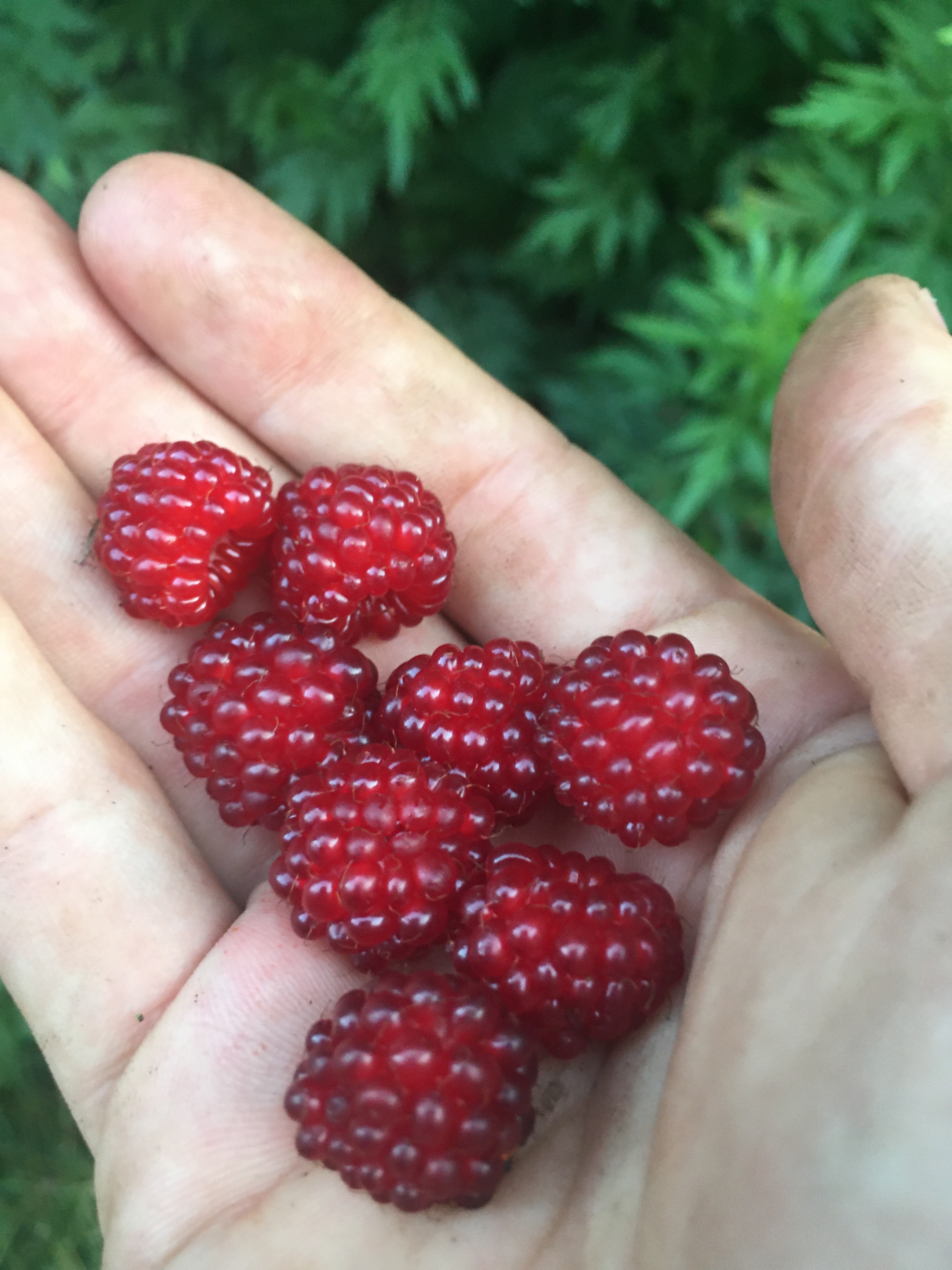
So a few weeks ago we drove to a secluded spot on a town road on a hot and humid afternoon and parked off to the side, near a gate that led to a paved walk. At the top of that paved walk was another gate, and beyond that a gravel trail. Each side of the gravel trail had an abundance of wild bushes, and wild raspberry bushes were predominant among them. Nidan took great pleasure in picking the fruit and sharing the tasty treats. berries

After walking the trail for about ten minutes he veered off to the left into a mass of greenery that had no discernable path. When I asked where he was going, he said the path started once we got through that tangled mess. So using my cane and free arm, I carefully picked my way through the morass of vegetation and came to an opening that led into the woods and saw a clear trail head of us. My initial thought was this wasn’t going to be too difficult because the path was clearer and wider than the one we explored two years prior. Then, after about ten minutes, we got to this hill.

Woods 1

This picture doesn’t do the length and steepness of the route justice, but this one, which I took on the return trip, does.

Hill

“You’re joking, right?” I said to Nidan, “I thought there weren’t any bad hills. What do you call this thing?”

“Do you need me to help you?” he asked. I thought about it and decided it would be better if I flew solo, and after shaking my head no he nimbly made his way down the steep and narrow clearing to the gravel path next to a meandering brook that lay below, seemingly unconcerned about my fate. “Don’t get too far ahead of me just in case,” I said. He didn’t listen.

With my balance, going downhill is harder than going uphill, primarily because the inertia of gravity feels like an invisible force is trying to suck me downwards. Taking a deep breath, I took that first careful step and gingerly made my way down that hill, using my cane for stability, all the while thinking that K was going to kill me if I fell and broke something.

Once I reached the bottom, my welcoming committee simply said “See?” before walking along the brook and heading down another trail that was mostly flat, but was studded with fallen trees and protruding roots. Path

Nidan made several stops along the way and veered off the path wherever he found a tree that fell because that supposedly unearthed the crystals he like so much to discover. I wanted to keep going, and asked him where the waterfall was. He pointed straight ahead and said I would run into it towards the end of that path, but couldn’t tell me how long it would take before I got there. I explained would keep going until I found the waterfall then return. He assured me he’d either meet up with me or be off to the side of the trail somewhere if he saw something that interested him.

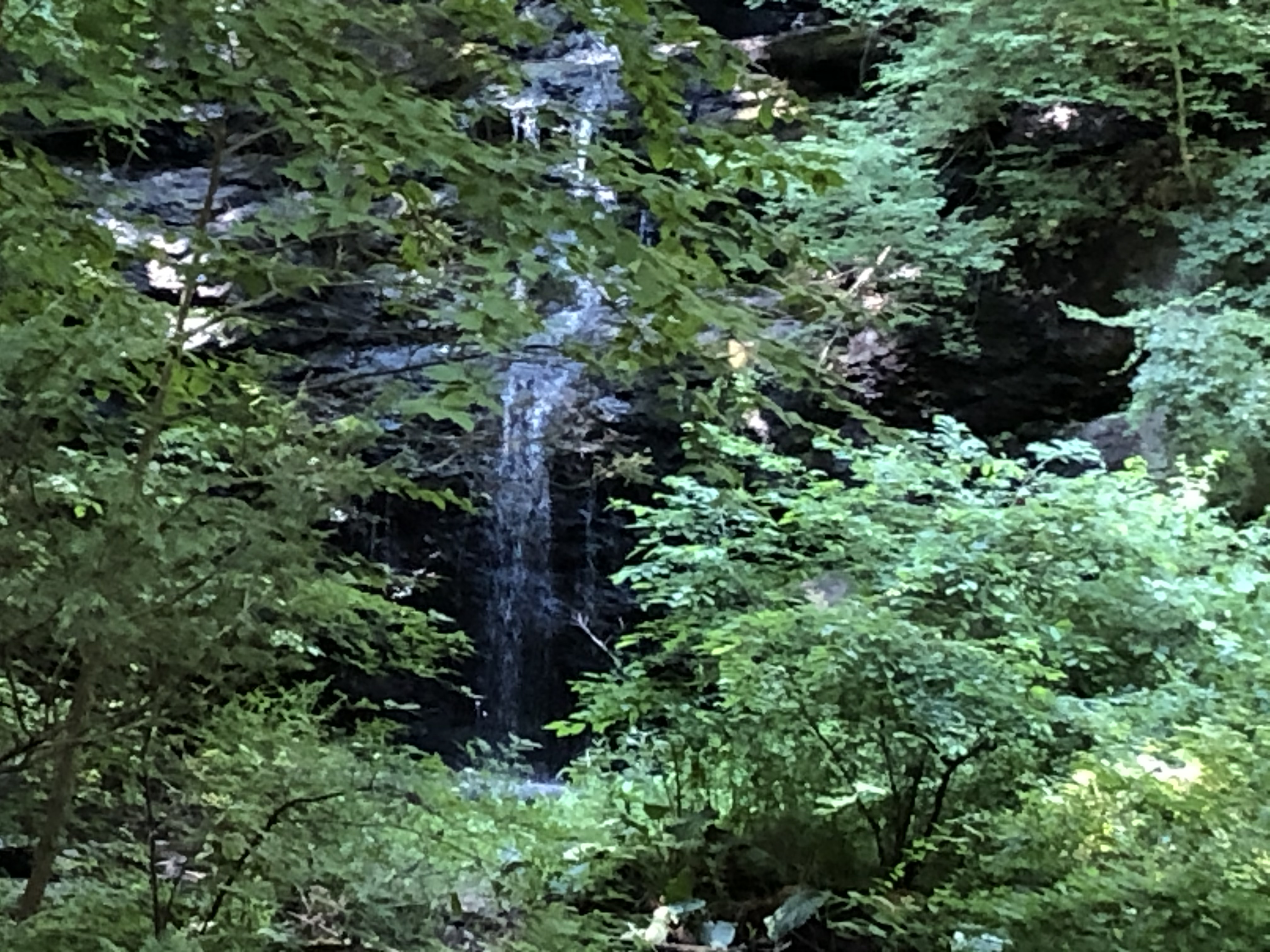
It took another twenty minutes of walking before I found what I was looking for, the waterfall that opened this post. I couldn’t get super close to it because the trek to it was littered with obstacles that I didn’t feel like negotiating. My leg was cooked and I could hardly lift it, which would have been necessary had I wanted to get closer. I was content with the view and listened to the sounds of the cascading water.

It was an idyllic scene. I was under a shaded canopy on a miserably hot day, sitting on a fallen tree, taking in the sounds of and beauty nature. I marveled at how Nidan had a knack for finding these kinds of places, and his fearlessness in venturing alone into the deep woods like this. I could see paw prints of various animals in the dried mud on some parts of the trail, not knowing what they belonged to, and not wanting to find out. He had told me once before that he had heard the screams of Fisher Cats on a couple of occasions, which had scared him. I also knew that sightings of bears and bobcats had been on the rise in our area, and I couldn’t help but think Nidan had some serious stones to venture out to places like this by himself. Of course, when I was 22 years old I never worried about things like that either.

Nidan was where he said he’d be when I returned, rummaging around the root ball of some large tree that had fallen. He had a couple of crystals in his hand that he brought to a nearby brook to wash off, but discarded them once they were deemed unacceptable. Fortunately, I wasn’t around the following day in that same area because he made this discovery, which he took great joy in showing his Mom via pictures and videos because he knows it freaks her out. He told her he found a rattler, which are common around here, but I know this isn’t one of them. Boys….!

snake

He veered in the direction of another root ball to resume his search but by then I was ready to go. I said I would start heading back because it would take me a lot longer to get to the car than it would him, and that he needed to start heading back soon, knowing that for him this could mean five minutes or a half hour. It didn’t matter in the end because he caught up with me before I was half way back to the car.

When we buckled into our seats, my leg felt like rubber, and I knew I had stretched my abilities to the max on this adventure. Sadly, I also understood that this was probably the last time I’d be able to do something like this with him.

As hard as it was making that trek, and in hindsight that trail on average wasn’t much different or difficult than the one we were on two years ago, I was glad I made the effort. As he has aged and my condition has regressed, we haven’t done as many things together as we once did. That’s only natural, but it made me a sad nonetheless. Those experiences and memories are priceless.  My darling little boy had grown into a fine young adult, closing one chapter of our lives and  opening another. I am going to miss those times. I already do.

Here are a few more pics from our adventure.

Ethan

Woods 3

Woods 6


The Longest Day

smilow

After three months of procrastinating, I finally I had my Ocrevus infusion today, and I am glad to have made the decision to go forward with it. Having said that, I forgot what a looonnnnnnnggggggg, dreary, boring, day this is.

The day starts with me leaving the house at 8. By 9 I’m in the unit and getting prepped for procedure number one, the plasma transfer. This usually takes about fifteen to twenty minutes, as the nurse has to get all the gear ready, scour each arm and hand to find a plump vein to plunder, insert the needles and get them secured, then start the centrifuge. I’ve been doing this for years, but I still get apprehensive when it is time for the needles. I don’t mind it if they stick me, then have to withdraw because the vein was playing hard to get, and try find another one. But what makes me cringe is when they have the needle in and haven’t found pay dirt, but think they are close. When that occurs they usually move the needle around while it is still in the arm. They are very careful, of course, but it is uncomfortable and I’ve been zinged a few times when they moved it a little too far or deep. When we are ready to rock and roll, the set-up it looks like this.

The procedure takes an hour and a half, but can go as long as two hours if there are complications with the blood flow. About a gallon of blood is filtered through the centrifuge, and the plasma is removed and replaced with six bottles of albumin, which is a blood product. The process is boring as hell because there is nothing to do but wait for it to be over.

My inclination is to fall asleep, but that isn’t possible because I have to periodically squeeze a rubber ball in the hand that is on the picture on the left. That is where the blood leaves the body to enter the centrifuge, and periodic pumping helps with the flow and makes the procedure go more quickly.

The thing is I can’t move the arm on the left because if that needle budges a millimeter the machine starts beeping and the nurse has to play with the needle until the beeping stops. And if I adjust my body too much the same thing can happen, so I have to be as still as possible. That means no book reading, perusing my I-Pad (impossible with one arm and limited movement) and morning television absolutely sucks.

I need to hydrate in the morning to help fatten the veins, but have to time it right so my bladder is empty by the time I am hooked up. Having to go pee with a needle in each arm and limited ability to use them makes that process very tedious and potentially messy. Fortunately, I got it right this morning. No urge to pee, and the nurse found a vein on the first try in each limb. This is not uncommon, but I didn’t feel so much as a pinch when they hit their target, which is rare. I can always tell how easy or difficult a time the nurse had by the amount of bruising that occurs the next couple of days. There will be none this time, but there have been others where the puncture wounds are surrounded an impressive display of red, blue and purple before turning brown, green and yellow until it disappears in about a week. 

When the transfer is done, the needle and tubing from the arm on the left is removed, the tubes are disconnected from the needle in the arm on the right, and I can finally get up to empty my bladder. Then the bag with the saline solution and Ocrevus is hung from an IV pole, tubes are run from the bag and into the port that protrudes from the needle, and the slow drip starts.

How slow? Between three and three and a half hours. But at least I can have lunch, nap, which I usually do (but not for the entire afternoon), and can read the paper and other sites I frequent on the I-Pad. All the while my blood pressure and other vitals are periodically taken. Still, there are periods of time within the afternoon where there is nothing to do but watch the clock tick.

By three thirty, the meds have been dispensed, all the needles are removed, and the gauze and ace bandages are affixed. But now comes the worst part: being placed on observation for an hour to make sure there are no immediate reactions. That hour is the longest of the day, and by then a unit that was bustling with patients and had every chair filled is practically empty, as you can see from the picture that leads this post.

My ability to leave got a little complicated today when my final temperature read 100.5 and a few folks became alarmed. But then the thermometer was placed under my armpit instead of under my tongue. That temperature was normal, and I was allowed to leave at around 4:45. I didn’t get home until 5:30.

I literally opened and closed the place, which is typical. If you start from the time I left home to the time I returned, it took nine and a half hours out of my day. Thankfully I only have to do this twice a year. I can’t imagine what it must be like for dialysis patients who have to go through something similar three or four times a week. I think I’d lose my mind.

I’m glad it’s over, and I don’t have to think about it again until late December. Now all I have to do is get through these next two days when the med’s side effects kick in. It’s later in the evening and I’m already starting to feel the warmth and fatigue.

I have a feeling the side effects are going to be worse than what I remember because it has been over nine months since my last infusion instead of the normal six. The doc on staff agreed with that assessment, explaining that the extra three months allowed more B cells to replenish. This means more will die off once the Ocrevus does its thing, which will lead to more pronounced symptoms like crushing fatigue and disorientation. My neurologist said I will be most vulnerable to the COVID virus over the next eight weeks. That’s a long time to be reclusive, and pretty much kills my summer.

The things we do to try to stay healthy. 


Immunosuppressed In a COVID World

decisions

Being immunosuppressed in a COVID world definitely presents complications the average bear doesn’t have to navigate. MS is particularly tricky, because the reason I have the condition is my autoimmune system is on overdrive. In theory that means I should be more protected than most. After all, in order to treat the disease, the goal is to put the immune system to sleep so the body stops cannibalizing itself.

Once I started taking the intravenous meds over ten years ago, I assumed a suppressed immune system would mean I would catch everything known to mankind.  I would have bet everything I owned that I’d be sick with a cold , flu, or some godawful thing from Thanksgiving until Spring, but that never occurred. In fact, I can count the number of times I have been ill during this span on one hand, which I still think is odd, and I have no idea what this all means.

The reason this is becoming an issue is because while last month’s plasma transfer provided immediate relief from the weakness and the falling, the relief only lasted ten to fourteen days. Since then, I have been struggling with my balance and ability to move around. I literally have no strength in my ankle, my leg feels like it has no bone in it from just above the knee down, and the weakness gets worse with each passing week.

So while the plasma transfer helped, it appears my condition has regressed. The only thing I have done differently in terms of treatment (other than going two months without doing anything instead of the normal one)  is that I suspended receiving the Ocrevus infusion that was due in March. It has been over nine months since my last infusion, and the gap between treatments is supposed to be six.

So my dilemma is to whether to bite the bullet and get the damn thing. This is not the first time I have stopped taking something to my ultimate detriment, and while I cannot clinically prove the infusion has been helpful, my not getting it certainly fits a historical pattern. But I know from lab test results that this drug shuts down cells that fight infections, and that doesn’t sound like a smart thing to do.

What is most irritating about being in a high at-risk group is that you have to think about and analyze everything. This is cumbersome because nobody knows if the decision they are about to make is going to be the correct one. I go through a line of thought that asks if the decision I am about to make is balanced and thought out or impulsive. Is it selfish? It is overly conservative? Is it rational or based on fear? Is it what is best for me? Is it what is best for my family? The process can be draining.

For instance, do I avoid any kind of crowd, even if I wear a mask, if I get the infusion? Do I stay home and not visit anybody or have anybody visit me? Do I live like the boy in the bubble? Or do I throw caution to the wind and say fuck it! I was taking a lot more immunosuppressing meds than I am now and rarely got sick. Why should this be any different?

Well, the difference is the potential consequence, which could be tragic for myself and those around me. That is the rub. One bad decision and the dirt nap can become a real possibility.

While I don’t have any plans for the summer, I like to have options. A group of good friends from out of state have talked about getting together this summer, and while I’d really like to do that I’m not sure how smart that would be if I go ahead with this. I’d also like to go back to a restaurant at some point in time, and be able to visit with local friends. Part of me says why worry if the necessary precautions are taking. Then again, there is that nagging little voice that whispers, “what if?”

My gut tells me to get the infusion sooner than later. I would like some assurances, but I know there are no guarantees. I suspect that I will be reduced to a prisoner in my own house for a minimum of three months if I get the stuff, and I really don’t want that.

But what good is having options if you can’t walk more than ten feet without holding onto or grabbing something? What good is freedom if it means a complete loss of mobility and a quicker date with the wheelchair. Is the risk worth the reward? I’m thinking not, but we are heading into the best time of the year, which would make my confinement seem exponentially longer.

Do I risk being completely disabled or risk being completely dead? I obviously don’t like either choice, so the middle ground is to get the drugs then hide from the world. That is the sober reality of the situation.

I’m waiting to hear to see what my neurologist has to say about my quandary. Meanwhile, I’m trying to figure out how I’d cope with the restrictions I know the infusion would place upon me. One option that crossed my mind is to increase my MMJ intake and live in a comfortably numb state, except when I am working or sleeping, until a vaccine is developed and my sentence is over.

Now there is a thought!


Back In The Treatment Saddle

saddle

With few exceptions, I have received plasma transfers and infusions of various drugs every month since 2008. From time to time, and especially within the last year,  I’ve wondered if I really benefited from these treatments, and pondered the possibility that I have been wasting my time. You’d think I would have learned by now because history has proven that when I have stopped or suspended certain therapies, the symptoms get worse.

I was due for my semi-annual Ocrevus infusion in March, but this was the time when COVID 19 was on the verge of introducing itself to our state, and I didn’t think it was a good idea to take immunosuppressant drugs. So I received the plasma transfer and steroid infusion that month, but deferred the Ocrevus until I spoke with my neurologist.

The gist of that conversation was my logic was sound, and that it might be best to defer any future treatments as long as my symptoms were stable, giving us time to learn more about the virus and what was about to happen in our state.

April rolled around. I was feeling fine, and I planned to skip everything for another two months, but then decided to keep a May appointment I had on the books for the plasma transfer and steroids infusion, just in case.  It’s a good thing I did.

Halfway into April, the bad leg started to feel weaker, and I began to question the treatment moratorium. Then the falls started.

I don’t fall very often, maybe once or twice a year, and almost always when I am careless and not paying attention to something. That has always been a good barometer for how I am doing. During a three week span from mid April into May, I fell four times, and it wasn’t due to carelessness. My leg felt like it was turning into jelly, and walking around the house was more difficult, especially in the evening, as I was grabbing onto and leaning against anything within reach to get from point A to point B. Needless to say, this abstinence wasn’t working, so last Thursday I bit the bullet and headed back to the hospital to resume treatments, desperately hoping that I didn’t wait too long and that what I was experiencing was my new normal.

I was also wondering how different the experience would be compared to the pre-COVID days.

The drive to the hospital wasn’t all that different in terms of the traffic. It wasn’t super busy, but it wasn’t like driving through a ghost town either. I’m not sure what I expected, but what I saw was fairly normal for that time of the day.

Then I arrived at the parking garage. The floor I park on has somewhere between 150 and 250 parking spots, and the handicapped spaces, which are limited, are always full regardless of how early or late I arrive. Not only were those spots readily available, but I counted a total of 10 cars parked on the entire floor (when I left it was down to 6). I knew from my work that volume was down significantly, but looking at numbers on a spreadsheet is one thing. Actually seeing what that means has more impact, and I was honestly shocked at how empty the garage was.

The first order of business when I walked into the building was to make sure I was wearing a mask (the hospital provides them to those who don’t) and confirmed that I had an appointment (no visitors are allowed). Normally I head directly to the elevator and go upstairs to the treatment area. Instead, my temperature was taken, and I was asked a bunch of questions regarding where I have been and who I had been in contact with before I could proceed. The experience walking from where I started to the treatment area was similar to that of that parking garage: there weren’t many people around.  

The treatment area was on a different floor, having moved one floor down. The top two floors were exclusively dedicated for COVID patients, and the floor below those was being used as an ICU for these patients. The floor my treatments were usually on was left open for potential overflow.

The new treatment location was much smaller and felt claustrophobic. I was the only patient there when I arrived, and although one other patient did arrive after me, we could not see one another. In the pre-COVID days, the main treatment area was packed.

I had to keep my mask on the entire time I was at the hospital, and everybody who worked or was being treated at the hospital wore them too. I also learned a new term. When I temporarily removed my mask to drink some water after having it on for an hour and a half, the influx of fresh air was cool and refreshing. I made a comment about it, and my nurse congratulated me for experiencing my first “airgasm.”

The roads were empty during the drive home, which was a little eerie. I had left during what would normally be considered rush-hour, but the cars on the highway and the state routes were few and far in between. There were less vehicles on the road than you’d experience if you ventured out early on a Saturday or Sunday morning. The ghost-town type experience I wondered about had certainly come to fruition. I didn’t see many cars. In fact, I didn’t see much life at all.

The actual treatment experience was the same, which I expected. Finding veins was a piece of cake, presumably because I had gone more than two months without a needle stick. Later on in the evening it felt like I had more steel in my leg, and a week has gone by without any change. So I am cautiously optimistic that I dodged a bullet on the progression front. 

After speaking with my neurologist on Monday and talking about how I was doing, we decided to continue getting monthly plasma transfers and steroid infusions, but the Ocrevus will be deferred indefinitely. It has been nine months since my last dose of the drug, and I had assumed that my B cell level would be back in the low average range by now. I was shocked to learn that was not the case. The low end of average, by whatever units they measure it, is 4. My level was 0.9, so I’m not even close to normal. 

This development has changed my point of view regarding a number of items. I’ve been careful about social distancing, wearing masks and gloves when I am out, and things of that nature. But I have also been stubborn about continuing to do normal things, like shopping for groceries. So we’ll be having most of our shopping done by the online services that provide them for the indefinite future.

Then there is the whole returning to work thing. I miss the office and the people I work with, and presumed I would be returning once the state and the health system started to relax its restrictions. Now that I know my body’s ability to fight off infections is significantly compromised, I can see myself working from home much longer than I ever anticipated or wanted. That will be a different discussion for a different day, but I can’t see placing myself among crowds of people, even with a mask, until a vaccine is developed. Why take that chance?

I’m not afraid, will not become a hermit, and will venture out when necessary, but the definition of necessary has certainly changed. I guess we’ll see how it goes.

As a post-script to this narrative, I must say that the commute to and from the hospital, my employer of the last twelve years, opened my eyes. It was a wonderful experience, one that afterwards felt like I had temporarily busted out of jail. I had forgotten what it was like to feel free.

The commute was liberating. It was great to feel normal again, and to revisit the world beyond my self-imposed three mile radius. We take these mundane experiences for granted until they aren’t mundane anymore, and I didn’t realize the impact of what that really felt like until I was able to spread my wings a little.

I yearn for the day that kind of life can resume.


Brownies

Brownies

I wrote extensively about my foray into the world of medical marijuana in 2018, but after penning five posts from July 2018 to November 2018,  I didn’t want to come across as the High (no pun intended) Priest of Pot, and haven’t talked about it since. That doesn’t mean I’ve fallen off the bandwagon, however.

During my almost two years of being on the state’s program, I’ve tried a number of what I guess you would call delivery systems. The old stand-by has always been the mini-vapes, primarily because they are the most affordable (which is especially important seeing I still haven’t sold my house), and because I can control the dosage.  My one concern about vaping is the fact that I am inhaling shit into my lungs that doesn’t belong there, so I have tried other forms of the product to see if I could replicate the experience and get the same results.

These other forms have ranged from edibles to pills. Pills, which were almost as affordable as the mini-vapes, were a miserable failure because they were too strong and left me feeling paranoid for a long period of time. The edibles (honey) were expensive and tough to dose.  I would put it in a cup of tea, but either used too much (more paranoia) or too little. So I stopped looking for other alternatives until the other day when I saw something new on the menu.

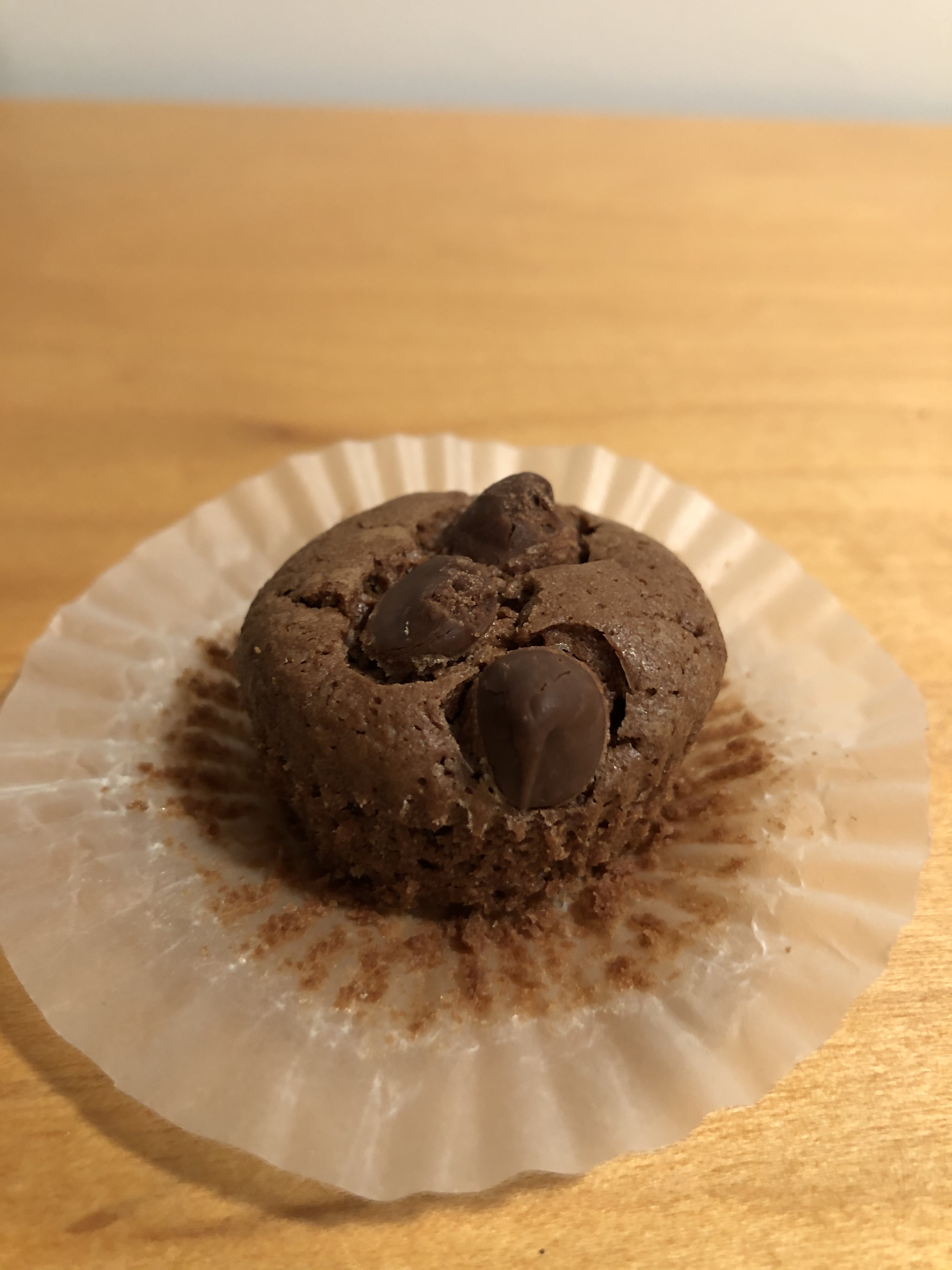
Hello Brownie Bites! Where have you been all my life?

If it wasn’t for the cost, I would ditch the vapes and gobble these treats exclusively. Unfortunately, they are the same price as the vapes, but where the vapes last a month, the number of brownies dispensed last only a week. Having said that, the experience is far superior to anything I have tried.

The great thing about these bite-sized goodies, besides the fact that they taste great and have no aftertaste whatsoever, is that the feeling you get is very consistent and mellow. The vapes by comparison come on strong, then recede to a pleasant plateau before fading away completely. And if you aren’t paying attention, one can take too much and experience the same paranoia as with the pills and honey, except it doesn’t last nearly as long.

Brownies sneak up on you. You get a warm sensation, and shortly therafter the warmth and relaxation spreads throughout the body. All of a sudden it dawns on you that you have a complete head and body buzz. The feeling isn’t overpowering, and your body and soul are completely relaxed. Talk about Nirvana! Anyone who suffers from anxiety would love them.

The other positive is that the sensation lasts three to four hours and there are no peaks and valleys. It’s like talking a slow, smooth elevator up a very tall building before coming back down in the same smooth, deliberate manner.  You don’t feel sloppy, and could interact with people without acting or sounding like you are stoned. It’s also inconspicuous because it’s food. You could pop one in your mouth in front of anyone and nobody would be the wiser.

And while this could be my imagination, I swear I walked better and more confidently the two times I have tried them.

So I have definitely found a winner, one that I will use to supplement the vapes to give my lungs a break. I just wish there was more stuff like this at a more affordable price. Of course, I could economize and reduce the frequency in which I use the stuff, but why bother? Like the saying goes, if it ain’t broke, don’t fix it.


Let It Bleed

Bleed

I’ve been taking MS meds for over eleven years. There was an eight year period, which ended two Septembers ago, where I received a monthly infusion of Cytoxan, a chemo drug. Now I get Ocrevus infused twice a year instead.

I’m not the most observant guy in the world, but there are two things about my body that have changed, and I believe these meds are the root cause.

The first is I have lost all the hair on my legs. Now, I was never Sasquatch when it came to body hair, but I had a pretty decent pelt covering my legs for as long as I can remember. That is no longer the case. I’m sure it has been gone for some time, but I never notice these kinds of things. K made this observation a while ago, and I am sure it had been that way long before she mentioned it.

The odd thing is this hair loss as not occurred anywhere else: not my on my arms, chest, head or the nether regions. All remain the same, except for my head, but that’s more of the routine thinning that comes with age. So if the meds have anything to do with it, why there and not anywhere else? It’s odd, but quite frankly, I really don’t care. I am wondering however if anyone has experienced something similar.

The other change concerns the fact that my skin is about as fragile as rice paper. By that I mean I get bruises, cuts and scrapes which draw blood that never used to happen before. Most of the time I’m not even aware that it’s occurred.

Take last weekend for instance. I was abusing my body on a job where Nidan and I were making a patio outside the back entrance of the new house by laying a couple of hundred paving stones on a prepared surface. He lifted these stones from pallets and carried them to me, where I laid them in a grid that ultimately created a patio that was about twenty-three feet long and four feet wide.

I was on my hands and knees most of the time, but did have to get up on occasion, or lean onto or into something to keep my balance. The only time I knew I cut myself occurred when I got up from my knees near a window, and as I raised myself I felt the fleshy section of the back part of my shoulder blade dig into the corner of the window frame.

Back in the day, nothing would have come of it. At worst, it might have resulted in a small bruise or perhaps a small scratch that didn’t break skin. Instead, I lost a small chunk of skin and it drew enough blood where I could feel begin to trickle down my arm. So K exhumed a small alcohol pad  from the first aid kit, cleaned the wound (which felt wonderful), put a Band-Aid on it and we were good to go. It still looks nasty five days later.

When we returned home after eight hours at the site, Nidan noticed a gouge on the back of my leg near the heel that I didn’t know was there, and have no idea how it got there. I also noticed about a half-dozen zig-zag type scratches that had dried blood on them, in addition to a nickle-sized abrasion on one of my kneecaps, presumably from being on my knees all day long. I could see that happening if I was kneeling on solid stone, but I was kneeling on a cushioned pad instead. Somehow, the constant shifting peeled several layers of skin, and what I wound up with was an angry, seeping abrasion.

As I was finishing up that day I noticed that the nail on my big right toe was sore. When I was on my knees, a lot my weight was placed on tops of my feet, which were pressing into the patio surface most of the day. I inspected the toe and saw nothing unusual, and therefore didn’t give it much additional thought.

My foot often twitches during the course of the day, and when that occurs the big toe usually curls upward into the toe of my shoe. Most of the time I don’t pay attention to it, but yesterday my toe hurt every time it curled up. Upon removing my sock to inspect the cause, I saw that almost half of the area under the nail had filled with blood and was turning blue/black color. If anyone of you have ever banged your fingernail with a hammer or mistakenly kicked a hard, immovable object, you know what I’m talking Toenailabout.

These types of things have been occurring for several years, with more frequency each subsequent year.  Trivial mishaps that might have resulted in a bruise or small scratch that didn’t break the skin’s surface, always create a bruise or draws blood now, and sometimes a lot of it. Nothing that is stitch-worthy, mind you, but enough to use several tissues to stem the tide. Since my balance is so bad, I am frequently bumping into something, and if that something has a sharp corner or edge, I bleed.

My Dad lived until he was 96, and his 96 year old skin was a lot tougher and more durable than mine is now. The only explanation I can come up with is that the meds have done this. What else could it be?

Hopefully it won’t get any worse.


The New Normal

Normal

2019 will mark the eleventh year I have been living with MS. After it rudely introduced itself,  first on a treadmill and then a few weeks later when I was outside mowing the lawn, the symptoms weren’t that cumbersome. It took a couple of years before it permanently changed the way I walked, and the progression has been slow but steady ever since.

Some years have been worse than others on the progression front, but the result has been the same: my physical abilities are worse on December 31st than they were on January 1st.  That isn’t unusual given the nature of my beast, but as I was cruising with the blimp the other night watching a video that chronicled the Red Sox magical 2018 season, a thought occurred to me that in retrospect was both surprising and sad.

I honestly can’t remember what it feels like not to have MS.

That doesn’t mean I don’t I remember the life I once had, the one with no physical restrictions. After all, I still have the pictures and video. That was a life where I didn’t think twice about undertaking any chore,  where I could to stay outdoors in the summer heat as long as I wanted, and where I could play eighteen holes of golf on any kind of course. Those days seem so carefree and foreign now.

So yes, I remember the events. What is forgotten, however, is what it actually felt like to walk unimpededly, without thinking about every step I take. I don’t remember what it felt like wondering if every change in my body is an indication of additional slippage into the rabbit hole of progressive MS. I don’t remember what it felt like to run, go on long walks, to ride a bike, to frolic on the beach, to take the stairs without measuring each step, or not having to worry about falling in public. I don’t remember what it was like not having to worry about where the nearest bathroom is for fear of peeing myself, or not requiring a urinal within arms reach every time I am in my car.

My new normal has eclipsed everything about my old self. The mindset where everything is assumed and taken for granted is dead. I don’t remember anything about what is was like to be whole and able bodied. I don’t remember what it was like not having to go to a hospital every month to have my blood filtered and replaced, or having toxins infused in the hope that my body will stop cannibalizing itself.

I don’t think I’m unique in that regard, but I consider this disability as the death of my former self. That might be hyperbole because I obviously still reside in the land of the living. I have the same emotions, many of the old concerns, and continue to plod forward and rebel against my reality any way I can. In some ways I am better off mentally because I no longer take anything for granted, appreciate the little things more, and therefore have a better perspective on life. But it is not an exaggeration to say that I am a fundamentally different person than I was eleven years ago, and that this version of me could feel like Nirvana compared to what my status might be another eleven years from now.

This is the part of living with a chronic illness/disability that nobody talks about or explains to you. When you learn about your new reality, it’s understood at a certain level that your life will change. If you accept and adapt to that change like I did, you adjust to a failing body with as much grace and stubbornness as can be mustered. You don’t give up or give in, but in that process you also don’t realize that your previous life will be relegated to the dustbin of your memory until the day comes, like it did for me earlier this week, when you realize you can’t remember what it felt like to be the person you once were.

An argument can be made that this is a part of the aging process, but I’m not willing to concede that because I’m not even sixty yet. I’m no spring chicken, but I’m not an old geezer either. This is not the mournful lament of a man in his seventies who is acknowledging the effects of an aging body for the first time. My epiphany was the product of this neurological condition that has consumed my life over the last decade, and it caught me completely off guard.

The fact that I can’t remember any of the stuff I mentioned burst my denial bubble, at least temporarily. Not being able to remember what it felt like to have two good legs is like not being able to remember what it felt like to fall in love the first time, to lose your virginity, or to hold your infant child for the first time.

I’ll get over it, because what’s the point of crying over spilled milk? But it really does suck.